

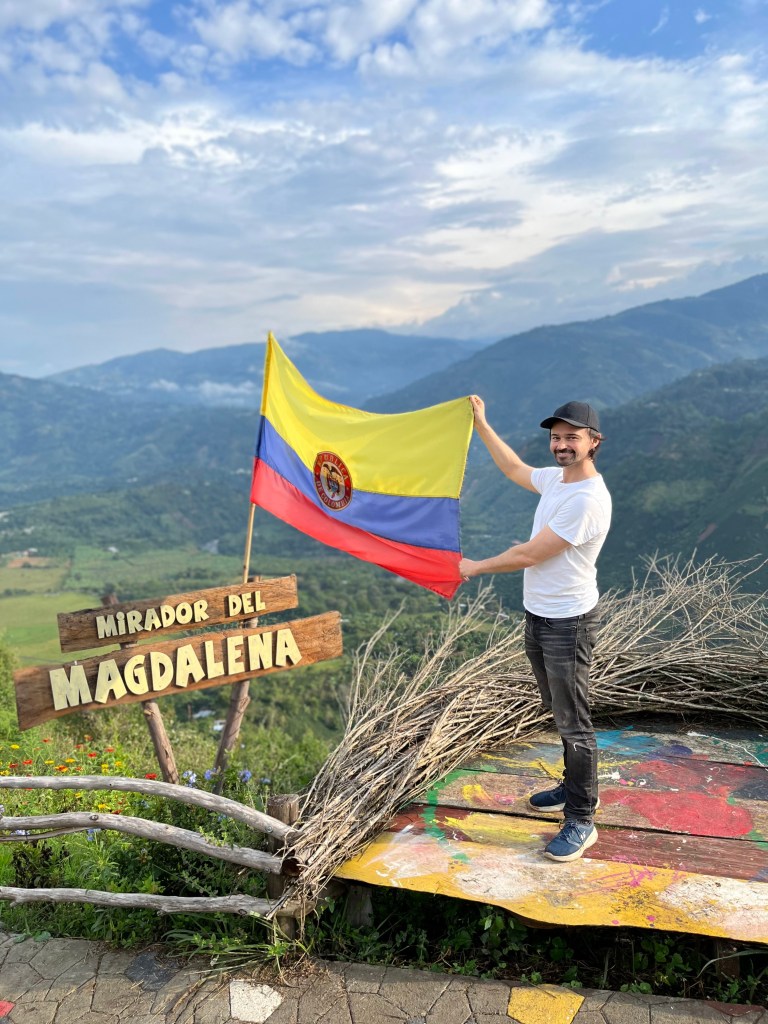
Yesi and I started dating in 2022.
I feel blessed to say we have a healthy relationship.
We do what most couples do: We have dates, talk about our day, and we enjoy spending quality time together.
Our relationship is like most couples, except for one thing:
We live thousands of miles away from each other and in different countries.
She lives in Neiva, Colombia while I’m in Sausalito, California.
Despite the distance, we get to see each other every couple of months. Unfortunately, the US government denied her visa application which means we spend our time together in Colombia.
Thankfully, I work remotely and there often are good flight deals to Bogotá.
I typically stay with her and her mom for at least two months each time.
Having this much time is great because there’s a lot of quality time.
It’s also enough time to have a full cultural immersion during each visit.
Cultural immersion is an interesting adventure
Immersion into Colombian culture has its benefits: You learn more Colombian slang, begin to appreciate the amazing food, and start living like a Colombian.
Por ejemplo…excuse me, for example you start saying things like “De una vez”(right away, right now) or “Que hubo?” (what’s up) to people, which is fun.
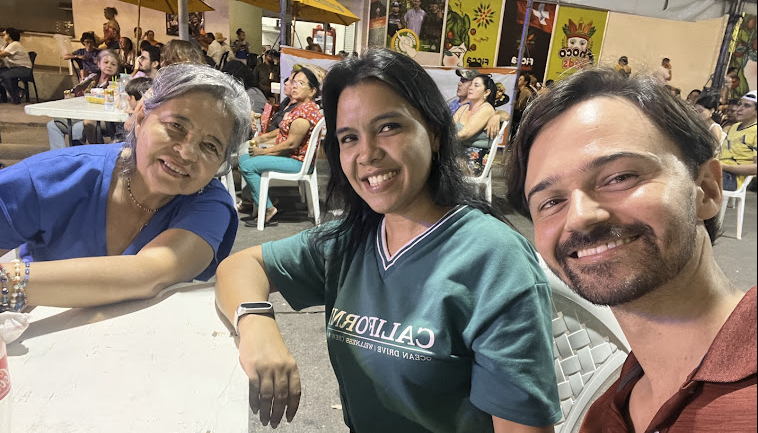
Yesi, her friends, and her family have been wonderful to me which also makes me feel like I belong here.
In cultural immersion, you begin picking up the minor nuances of daily life.
Another example: In Neiva people don’t say the word “lucky.” In their view, when good things happen they say “blessed” as in blessed by the big guy up in the sky (God).
It’s because faith has a strong presence wherever you go here. It’s also normal to see businesses have crosses and scripture on the walls.
Over time, I’ve stopped saying words like “lucky” because it just doesn’t resonate with folks here.
The more time I’ve spent here I’ve found lots of aspects of life that are different compared to the US.
There are a lot more motorcycles, in public you need always to be aware of who’s around you, and you’ll probably hear merengue or tropical music on every corner.
This is where the flip side of cultural immersion sometimes shows its not-so-shiny face.
Enter culture shock
According to the University of Kansas Counseling and Psychological Services (CAPS):
Culture shock is a normal process of adapting to a new culture.
It’s when we become aware of the differences and possible conflicts in customs between our home and a new environment.
The article I read says that normal feelings during this time are anxiousness, anger, homesickness, and confusion.
Each time I’ve come to Colombia, mini (or sometimes big) culture shock “episodes” temporarily take hold of me.
In the US, I can freely walk through my hometown at any hour of the day.
In Neiva, you’d need a collectivo bus because the city center is too far away. I can’t drive in Neiva because a. I haven’t learned to use stick shift yet and b. the drivers here have a different style (mostly crazy and fewer people fully stop) compared to back home.

This, over time, sometimes makes me depressed.
I’ve been spoiled in Colombia. Yesi’s mom is a great cook and each day the three of us will have lunch together.
Eating is more of a communal ritual in Colombia than in the US. Cooking lunch here usually means making protein, rice, two side dishes, and eating sliced fruit.
This is wonderful but sometimes I just want to make a salami sandwich, eat it in two minutes, and go back to work.
Telling Yesi and Piedad that I don’t want to eat with them would be disrespectful, so no matter how I feel I still sit down and join them.
But this conflict between what I’m used to and what they’re used to can sometimes create an uneasy tide of emotions.
Sometimes I feel guilty because Piedad and Yesi spend a lot of time cooking. Even though I help, and sometimes cook, I usually just enjoy the fruits of her hard work.
I want to cook more, but with my work, it’s hard to carve out enough time to do that.
When this happens, sometimes frustration and sadness take over.
How to overcome a case of culture shock
After coming to Colombia a few times, I found ways to keep my severe emotions under control. If you are in the same boat as me, then try them out!
• First, I became aware that any extreme emotion was because of my culture shock. In other words, it became easier to identify my culture shock moments.
• Inside, I told myself that this is how things are here. I began accepting reality and tried my best not to compare my country to Colombia anymore.
• Instead of thinking of how “difficult” things were, I changed the narrative. I began thinking about all the great things about Colombia, like my girlfriend, Piedad, the food, and Yesi’s family.
• I talked with Yesi a lot. Instead of keeping my feelings slowly burning inside, I started to release them healthily.
• I started napping more and just let my body rest whenever I felt tension inside. (usually, sleep has been the best medicine)
• I started writing about these experiences on Medium. 😉
Say hello to reverse culture shock
When I came back to the US from Colombia for the first time, I thought I was out of the culture shock woods.
I expected the US would make me feel at “home.” I expected I’d feel just the way I did when I left.
However, after the excitement wore off, something that was buried under my consciousness began to sprout.
I felt out of place.
I almost forgot how to greet my friends and family like the good old days.
At random moments a Spanish word would come out when I meant to say something in English. On top of that, my English grammar was horrible.
The jokes my friends and I had all of a sudden didn’t resonate with me like before.
Listening to people talk about things like sports, politics, or topics that I’d been away from since being in Colombia felt less interesting.
In short, I felt like a stranger in my own country.
This confusion and disorientation is what experts call reverse culture shock.
The Council on International Educational Exchange (CIEE) says that feelings of:
- loneliness
- isolation
- withdrawal
- boredom
- apathy
- depression
are common symptoms of reverse culture shock.
The good news about culture shock
I learned that both culture shock and reverse culture shock are normal. They also will eventually go away.
In my own experience, I eventually overcame my challenging moments in Colombia. Over time I was able to reconnect with the people I cared about in the US.
How to overcome reverse culture shock
According to the CIEE, there are some great strategies for beating reverse culture shock.
• Reflect on how the experience helped you grow as a person
• Think about all the knowledge you’ve acquired
• Keep in touch with your new friends from those experiences
• Practice gratitude for all the experiences
• Be aware of what your mind and body need
Also, I decided to keep in touch with friends in the US more while in Colombia. Opening up more to the people I care about and not keeping my emotions trapped inside has also helped a lot. I try to follow local sports, the news, and stay in the loop of friends’ life events.
Doing so helped me feel connected to my roots.
In conclusion
Experiencing different cultures around the world has many benefits. One of the most interesting (and challenging) parts of this for me has been the different phases of culture shock.
If you’ve experienced (or currently are) culture shock, then I hope this article helps! You’re not alone!
Thank you to my girlfriend, her family, and loved ones back home for being supportive.
Thanks for reading. For more travel-related content, subscribe to my newsletter.
Take care and have a great day,
Daniel
P.S. Need help planning a trip? I’m now offering travel consulting and planning services. Learn more by visiting Fiverr.



 There Dan Was
Leave a comment