

I’ve learned how to make friends with street dogs in Colombia.
It only took a month, but now I feel safe to say the dogs on our block are now my amigos.
This is one of my personal milestones since coming to Neiva in March.
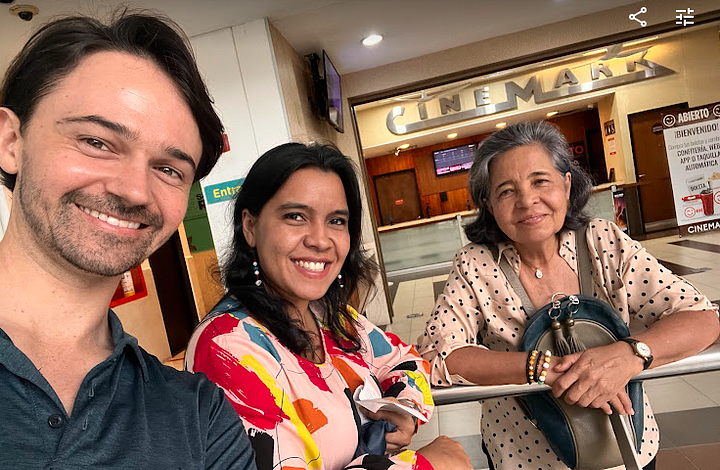
I’ll be spending the next month in Neiva with my girlfriend Yesi and her mom Piedad.
I’ve been coming to Neiva since Yesi and I started dating in 2022. There have been many beautiful memories in Neiva. There also have been plenty of culture shock moments. As a gringo in Colombia, this is normal.
Slowly, I’m getting used to life in Colombia. One of the most noticeable adjustments here is the language. In Colombia, Spanish is the national language.
But it’s not the same Spanish I grew up listening to in the US, nor what you’ll hear in other countries like Spain.
I refer to the local language as “Colombian Spanish.” This is a foreign beast compared to other countries’ versions of the language.
According to Wikipedia, 20 countries use Spanish as their de facto language.
If you’ve ever studied the language, you’ll discover that there isn’t one universal version of Spanish.
Besides common phrases and grammar, there are vast differences.
Vocabulary and Spanish slang are unique throughout each destination.
For example: In Spain, people say “coche” (car) but in Colombia folks say “carro.” In Peru, it’s most common to say “auto.”
Here are some cool (chévere) and important phrases you can use in Colombia to sound less like a foreigner:
Please note: I’m basing this on Spanish from Neiva, which might be different than other regions in the country.
Also, most of these phrases used the formal or “usted” verb conjugation. In Neiva, this verb form is common for many interactions regardless of age.
“Dar Papaya”
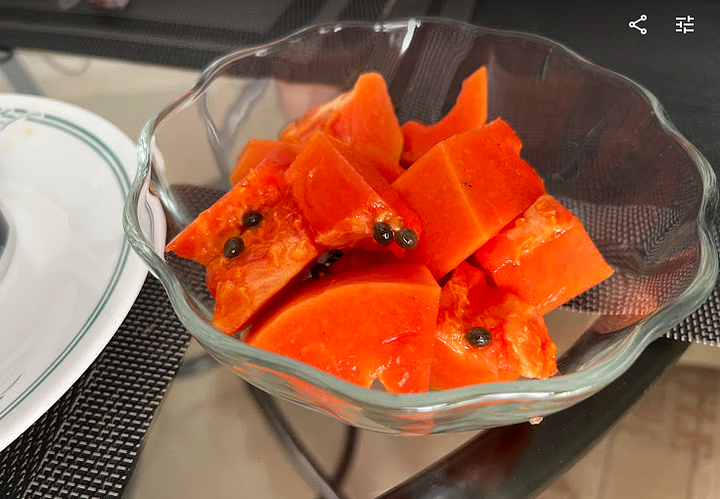
This isn’t necessarily a phrase you need to say, but it’s a phrase you should understand.
When I came to Neiva for the first time, Yesi’s family reminded me to never “dar papaya.” This translates to “give papaya.”
At first, I thought, “I’d absolutely love some papaya! Where do I sign up?”
Papaya is a delicious fruit found in supermarkets throughout Colombia. When you are “giving papaya” it has nothing to do with food: it means you’re letting your guard down.
In Colombia, when you let your guard down, it’s easier to attract unwanted attention.
Here are some examples of “giving papaya.”
- Walking in public with your phone out.
- Wearing a fancy watch around town.
- Taking out your wallet to find cash on a busy street.
In a nutshell, it means to be safe and aware of your surroundings.
¿Qué Más?
If you are looking to greet a Colombian, you can get by in most places with “¿Qué más?” which is the Colombian way of saying “What’s up?”
Note #1: I learned Colombian greetings usually involve at least three questions.
“¿Como le ha ido?” (how have you been?), “¿Que cuenta?” (what do you say?) and “¿Que hubo?” (Neiva people’s unique version of “¿qué más?) are common greeting combinations.
You don’t have to answer all three. I like to respond “Muy bien, gracias. ¿y usted?”
Note #2: In Neiva, almost everyone says “¿como ameneció?” which means “how are you this morning?”
I don’t know if other regions of Colombia do the same. “Hola, ¿como ameneció?” is a great way to greet people.
“Hagáme un favor”
This translates to “do me a favor.” For some reason, asking for favors is a normal way to ask for things in Colombia.
When you need to ask a question like “Where is D street?” to a stranger, it’s best practice to say “do me a favor” before asking.
In Colombia, it sounds more polite to ask this way. It also increases the likelihood the person you ask will help (colaborar).
It’s like a way of warming someone up before you ask for help.
“Con Permiso”
Colombians are some of the pilotest people you’ll ever meet. If you don’t reciprocate with good manners, people will think you lack culture or respect.
You will hear simple phrases like “con permiso” everywhere you go.
This phrase is useful to move around someone, by two people blocking a door, or use the bathroom in a group setting.
The literal translation is “with permission,” but it really means “excuse me.”
I’ve learned better manners in Colombia.
“Regálame un _________, por favor”
This phrase is popular when you order something at a store, restaurant, or coffee shop.
“Regálame” means “give me.” Because “regalar” means to “give a gift,” I was confused. It sounded like everyone wanted a free gift.
But in Colombia, people don’t take it that way.
A waiter or shop clerk understands we don’t want the bottle of water for free.
It’s a way of saying “I’d like ______ please.” They’d understand you want the item and are planning on spending money.
However, in non-paying situations, you can use the same phrase.
For example, imagine a server just delivered your lunch but didn’t give you a spoon.
You can say:
“Regálame una cuchara (spoon), por favor.”
In this situation, this person knows you’re not looking to buy the spoon. Rather, you just need one.
You don’t have to request things this way, but it’s what I commonly hear whenever I go places in Colombia.
Bonus #1: “Paila”

This is one of the most fun Colombian slang words I learned.
Simply put, “paila” means “too bad” or “that sucks.” You can say it as a standalone word and people know what you mean.
- If you miss the bus…“paila.”
- Did you not get the job?….“pues (well), paila.”
It’s used in the context of something that’s beyond repair, saving, or correcting.
If a person makes a huge mistake and they can’t ever make amends for their error, you can even say to them:
“Estás paila.”
Bonus #2: “Berraco”
My favorite second Colombian slang words is “Berraca/o.” It’s one of the most versatile vocabulary words I’ve discovered so far in Colombia.
You can use the word in so many ways, which I love. For example:
- Marta es una berraca (Marta is awesome at a certain activity)
- Marta es berraca (Marta is brave)
- Marta está berraca (Marta is angry)
- Esté problema está berraco (this is a really tough problem)
- Tu carro es para berracos (Your car is for brave people)
Thanks for reading. If I’m using these words incorrectly, let me know! (I’m still learning).
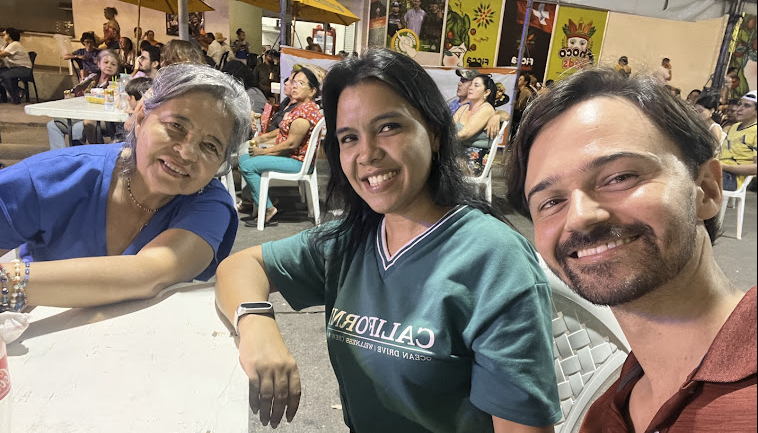
I hope you found these words and phrases interesting. Thanks also to Yesi, Piedad, their family, and friends for helping me say these phrases in a heavy gringo accent.
If you’re looking for more travel-related content, subscribe to my newsletter!
Have a great day,
Daniel
P.S. Need help planning a trip? I’m now offering travel consulting and planning services. Learn more by visiting Fiverr.


 There Dan Was
Leave a comment